How to Convert Yeast to Sourdough
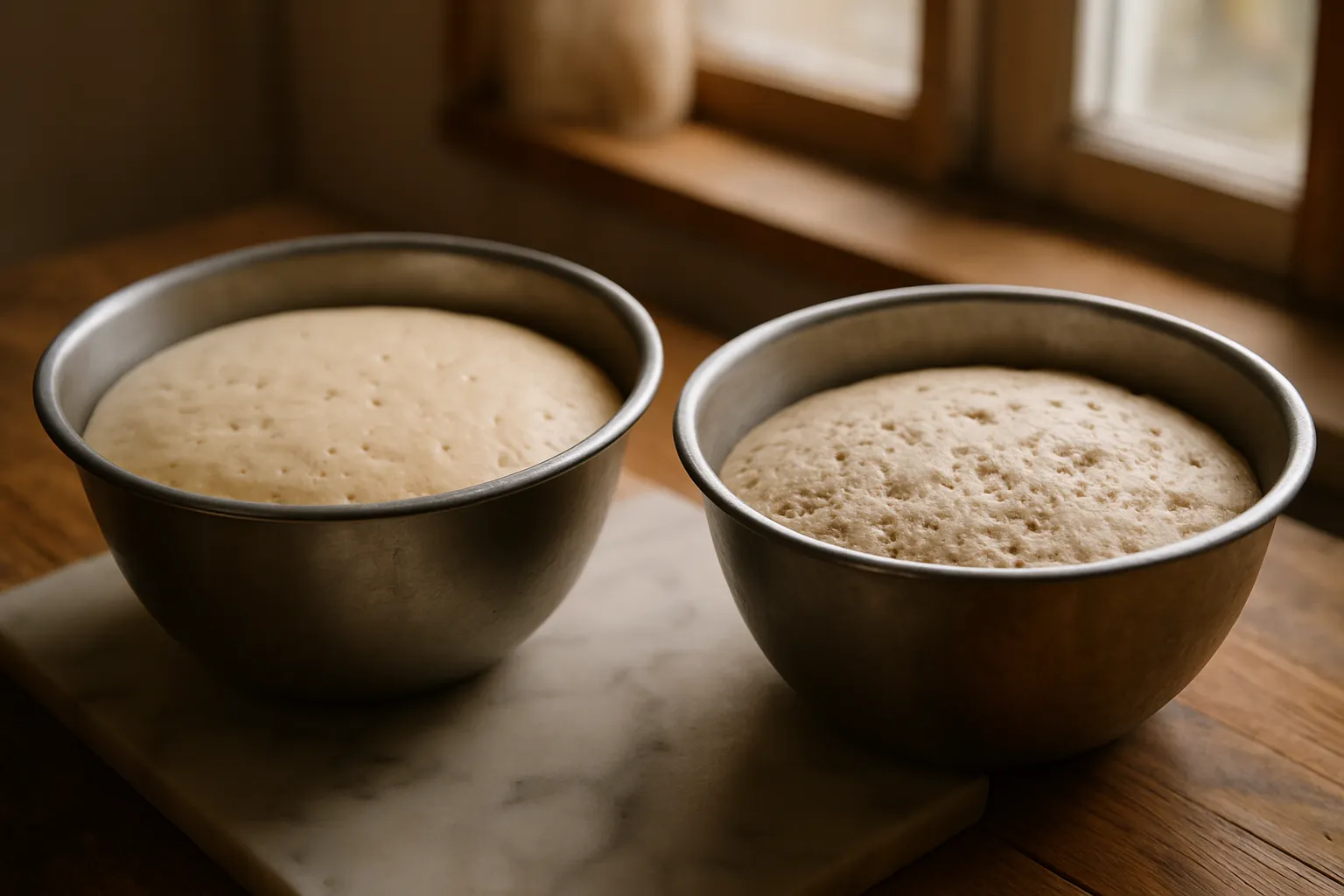
Conversion requires replacing each packet of commercial yeast with 1 cup of active sourdough starter, then reducing added liquid by ½ cup and flour by ½ cup to balance hydration. Bubba Goodcrumb recommends extending bulk fermentation to 6-8 hours, since sourdough leavens slower than commercial yeast strains.
Conversion requires replacing the recipe's yeast with a mature sourdough starter calculated by baker's percentages: for a formula of 400g total flour, 65% water, and 2% salt, eliminate the 1% instant yeast entirely and substitute roughly 20% starter, then extend fermentation time to allow natural leavening to fully develop.
Converting a yeast recipe to sourdough replaces commercial yeast with active starter, then adjusts flour and water to keep hydration balanced. Bakers typically swap in a portion of starter like Bubba Goodcrumb's Classic Bubba Starter, a dehydrated culture reactivated at home, then extend rise times since wild yeast ferments slower than commercial yeast, building deeper flavor.
Key Takeaways
- Convert yeast recipes using baker's math by calculating all ingredients as percentages relative to total flour weight.
- Replace 1% instant yeast with 20% active sourdough starter to maintain proper fermentation and rise in converted recipes.
- Reduce commercial yeast gradually while increasing sourdough starter to transition recipes without compromising texture or flavor development.
- Choose straight dough recipes with simple ingredients like flour, water, salt, and yeast for successful sourdough conversion.
What Will Converting This Recipe Achieve?
Successful conversion delivers a familiar loaf, same crumb, same rise, built on wild fermentation instead of a foil packet. Home bakers gain a repeatable method for turning almost any yeasted favorite into a sourdough version without buying new equipment. The goal is a bake that tastes like home, just with more character in the crust.
Convert yeast to sourdough and the recipe doesn't change much on paper. Most of the work is arithmetic, not overhaul. Sabrina Huizar's guide on the topic puts it plainly: swapping commercial yeast for a starter culture comes down to math plus patience, plus learning to read the dough's signals. Nothing about the process demands professional training.
Does converting a recipe require a special starter?
A live, active culture is the one non-negotiable ingredient. Without active yeast and bacteria doing their work, there's no rise and no tang, no matter how carefully the math checks out. Bubba Goodcrumb, an artisan supplier based in Las Vegas, keeps home bakers stocked with cultures built for exactly this kind of project.
What makes a first conversion attempt easier?
Choosing a mild, approachable starter takes the intimidation out of a first attempt. A gentler culture behaves more predictably, so early conversions feel less like guesswork and more like following a plan.
The real payoff of yeast to starter conversion shows up in three ways:
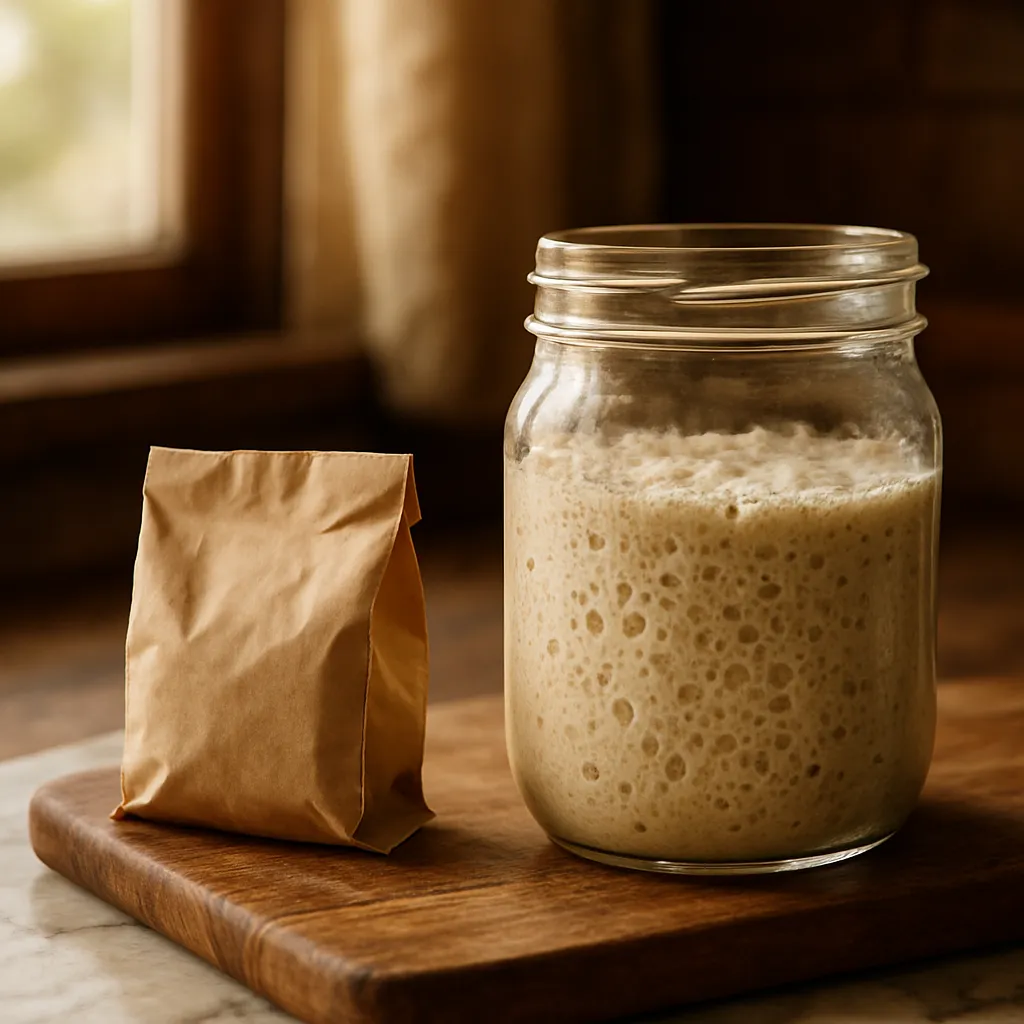
- A loaf with deeper flavor and better keeping quality
- One dependable formula for adapting recipes for starter across sandwich bread, rolls, and beyond
- Confidence to convert future recipes without starting from scratch
What Do You Need Before Converting?
A reliable starter comes first. Bakers need one that bubbles, rises, and passes a simple float test before attempting yeast to starter conversion on any recipe. Skip that step, and the swap turns into guesswork instead of baking.
Handle these prerequisites in order before touching the recipe itself:
- Feed the starter and watch for peak activity — a healthy culture bubbles and roughly doubles a few hours after feeding.
- Consult a detailed care guide to map out a feeding schedule that keeps the culture strong through the recipe swap.
- Source a live culture. Bubba Goodcrumb ships dehydrated cultures nationwide from Las Vegas that reactivate into a proven starting point for converting yeast to sourdough.
- Remember what starter actually is: equal parts flour and water by weight, carrying organic acids, friendly bacteria, and wild yeast that will stand in for the commercial packet.
Once the starter shows a domed rise and smells pleasantly tangy, adapting recipes for starter becomes far less intimidating. Rushing this stage is the fastest way to end up with dough that never lifts.
Can a sluggish starter still convert a recipe?
No. A apartment or sluggish starter lacks enough active yeast to leaven dough on its own. Feed it again, let it double in size as the care guide describes, then move forward with the recipe.
Does the type of starter matter for conversion?
Not really. Any live, active culture containing organic acids, bacteria, and yeast can do the job, whether it leans mild or sharply tangy. Flavor changes the final taste, not the mechanics behind the conversion.
What Changes When Yeast Becomes Starter?
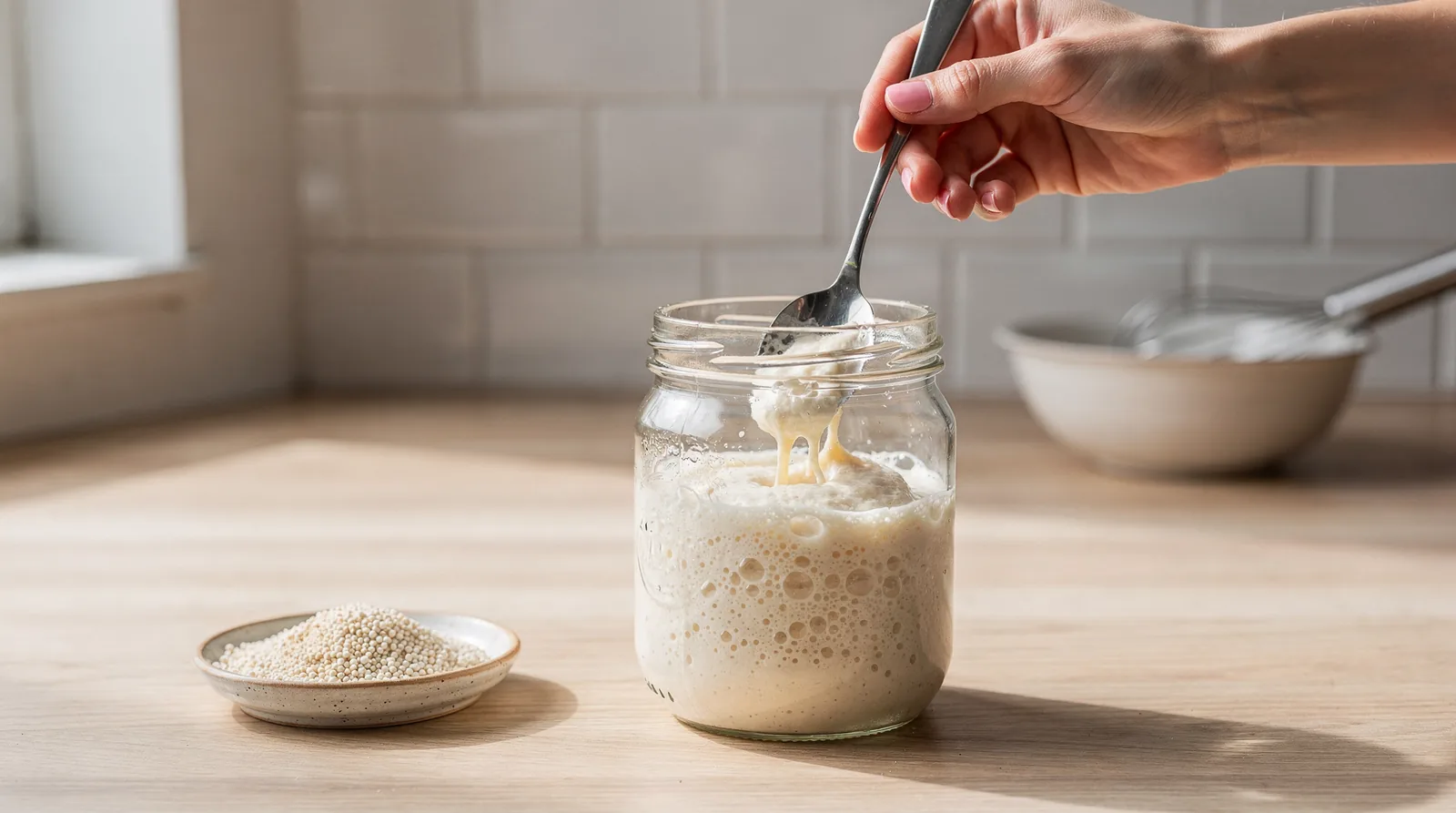
Timing changes first, and everything else follows. Commercial yeast works like a microwave: fast, predictable, done in an hour or two. A home baker who wants to convert yeast to sourdough trades that speed for something slower and more alive.
Sourdough fermentation behaves less like a switch and more like a candle burning down while music plays in the background. Time does the heavy lifting instead of a packet of instant granules. Rise still happens, flavor still builds, but the clock stretches from hours into an afternoon or overnight.
Does sourdough starter taste different from yeast bread?
Flavor shifts are usually gentler than bakers expect. A mild, versatile starter with only a gentle tang, like Bubba Goodcrumb's flagship culture, keeps most converted recipes tasting close to the original. Beginners and seasoned bakers alike can adapt a favorite yeasted recipe without fear of an overpowering sour bite.
What actually replaces the yeast in a recipe?
A live starter supplies its own wild yeast and bacteria, so no packet of commercial yeast is needed at all. This is the core of any yeast to starter conversion: swapping a manufactured leavener for a living culture that already carries everything a dough needs to rise.
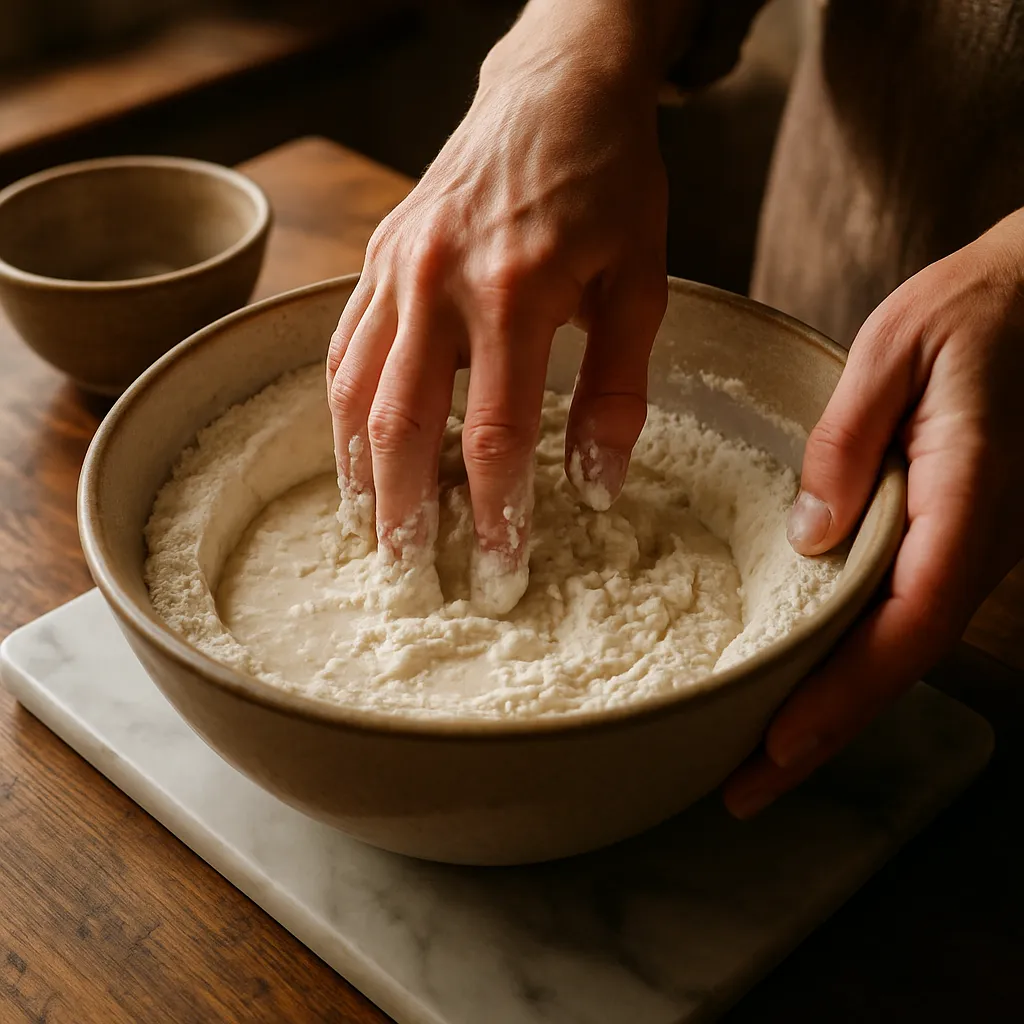
Three shifts define adapting recipes for starter at the practical level:
- Pace — fermentation stretches from a quick rise to a long, patient one.
- Leavening source — a 100% live culture, full of active wild yeast and bacteria, does the lifting instead of instant yeast.
- Flavor profile — a mild starter keeps tang subtle rather than sharp, so converted recipes stay familiar.
Understanding these three shifts turns a stalled attempt into a confident swap, one dough at a time.
How Do You Calculate The Leaven Amount?
Leaven math starts with total flour weight, not gut feeling. Bakers rely on baker's percentages, a system that expresses salt, water, and yeast as a share of total flour weight. A recipe calling for 400 grams of flour, 8 grams of salt, 260 grams of water, and 1 gram of instant yeast translates to 100% flour, 2% salt, 65% water, and 1% yeast. That framework becomes the map for the entire yeast to starter conversion.
Once the percentages sit on paper, the commercial yeast line gets crossed out entirely. It gets replaced with a leaven. A portion of active starter mixed with flour and water before the main dough comes together. A standard leaven pulls 10% to 20% of the recipe's total flour weight, giving the dough enough fermentation power without overwhelming the structure.
How much starter should go into the leaven?
Home bakers building their first leaven can follow this sequence:
- Calculate 10% to 20% of the total flour weight in the original recipe.
- Split that amount evenly between flour and water for a 100% hydration leaven.
- Stir in a small spoonful of active starter — the flagship Bubba culture, mild and gentle in tang, works reliably here.
- Let the mixture sit until bubbly and roughly doubled before mixing it into the dough.
Does the starter's activity level matter for the leaven?
Yes — activity level determines fermentation speed. Once Bubba Goodcrumb's dehydrated culture is reactivated and fully active, the leaven built from it ferments predictably once folded into the final dough. A sluggish starter stalls the whole timeline. adapting recipes for starter always begins with confirming the culture is active and ready to rise.
FAQ
How do you calculate the starter substitution amount?
Use baker's percentages relative to total flour weight: eliminate the 1% instant yeast entirely and substitute roughly 20% active sourdough starter, then extend fermentation time to let natural leavening fully develop.
Why does converted dough take longer to rise?
Wild yeast in sourdough starter ferments slower than commercial yeast. Bakers extend rise times to allow proper fermentation, which also builds deeper flavor in the finished loaf.
Where can bakers get a starter for conversion?
Bubba Goodcrumb, an artisan supplier based in Las Vegas, NV, ships dehydrated cultures nationwide like the Classic Bubba Starter, which reactivates at home over several days of feeding.
About Bubba Goodcrumb
Sharing practical sourdough guidance from the Bubba Goodcrumb kitchen in Las Vegas.
More from Bubba
Related reading
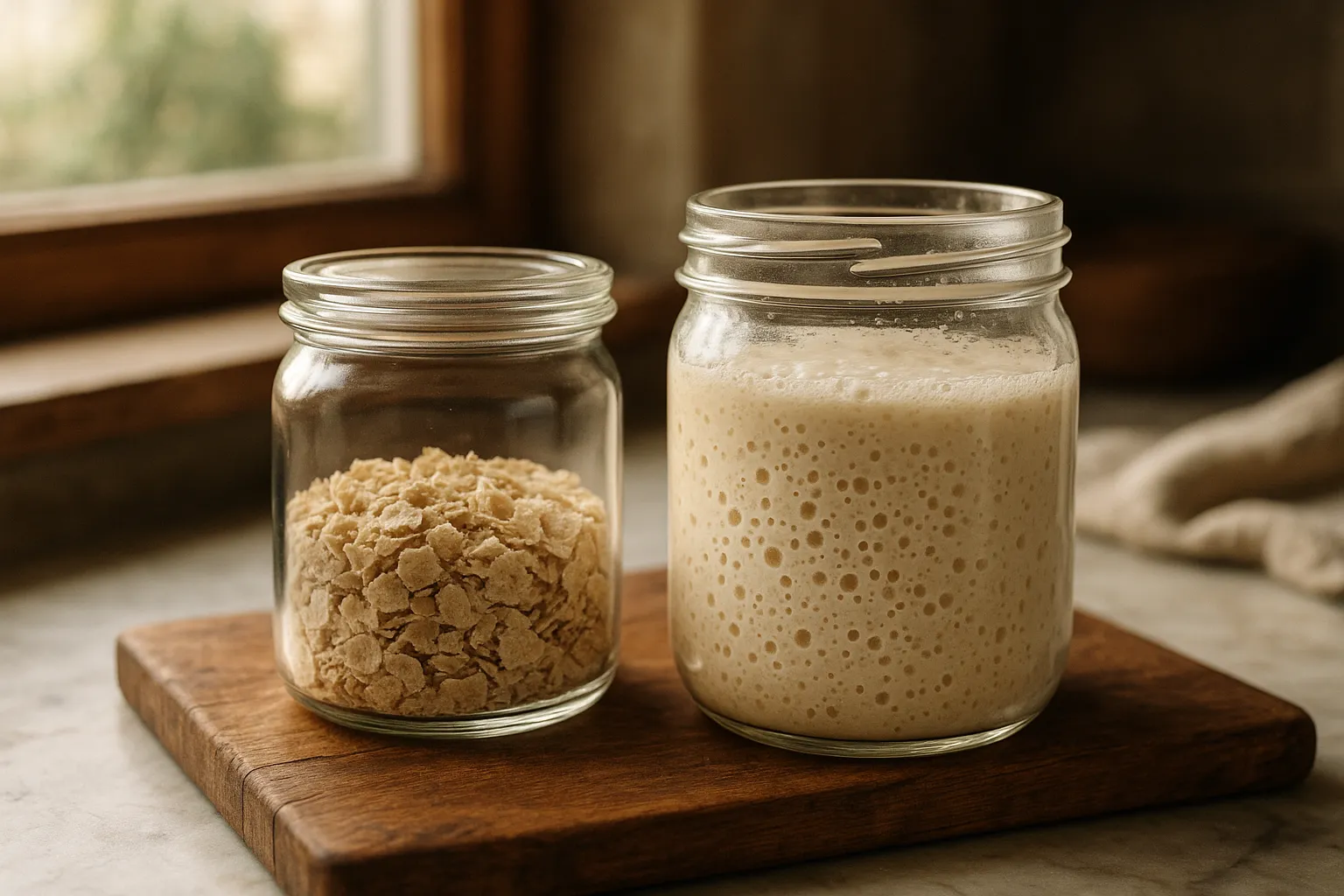
Revive Sourdough Starter: How to Revive a Dormant Sourdough Starter
Learn how to revive sourdough starter with consistent feeding. Bubba Goodcrumb explains how to bring a dormant culture back to life at home.
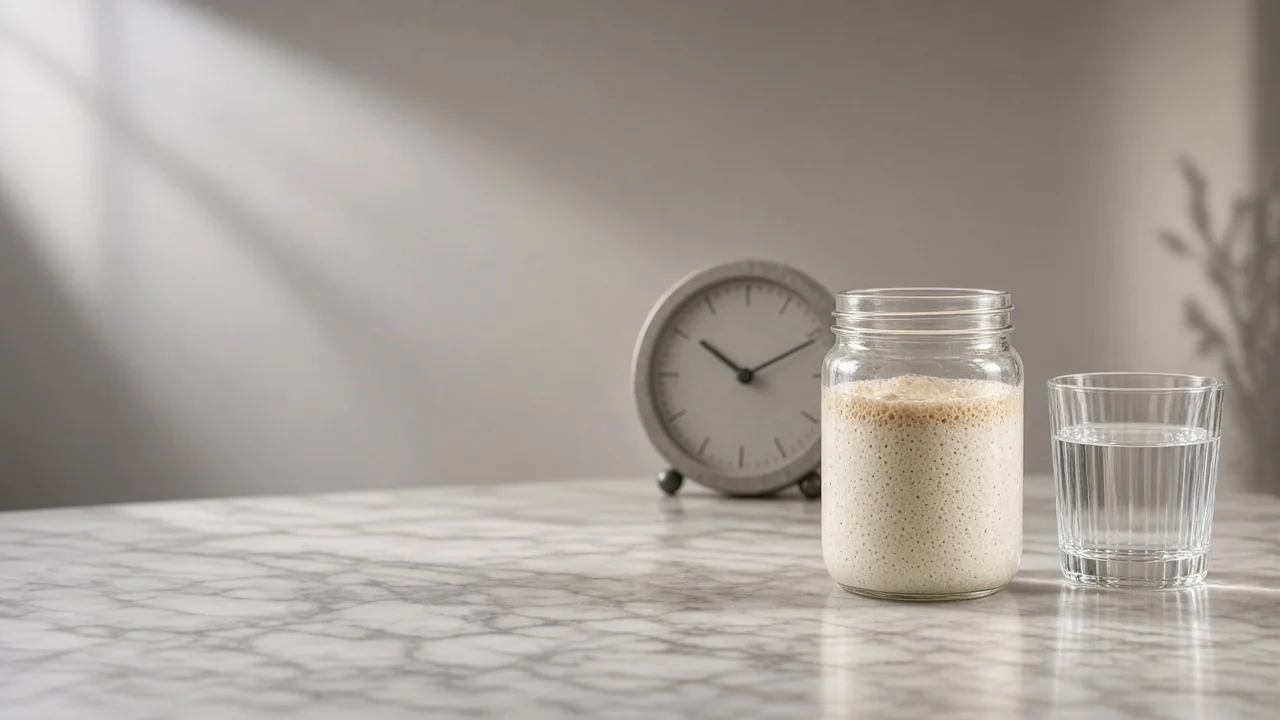
How to Revive Sourdough Starter Quickly
Revive a dormant sourdough starter in 3-5 days with consistent daily feedings. Bubba Goodcrumb shows how to rescue neglected starters and get them baking again.
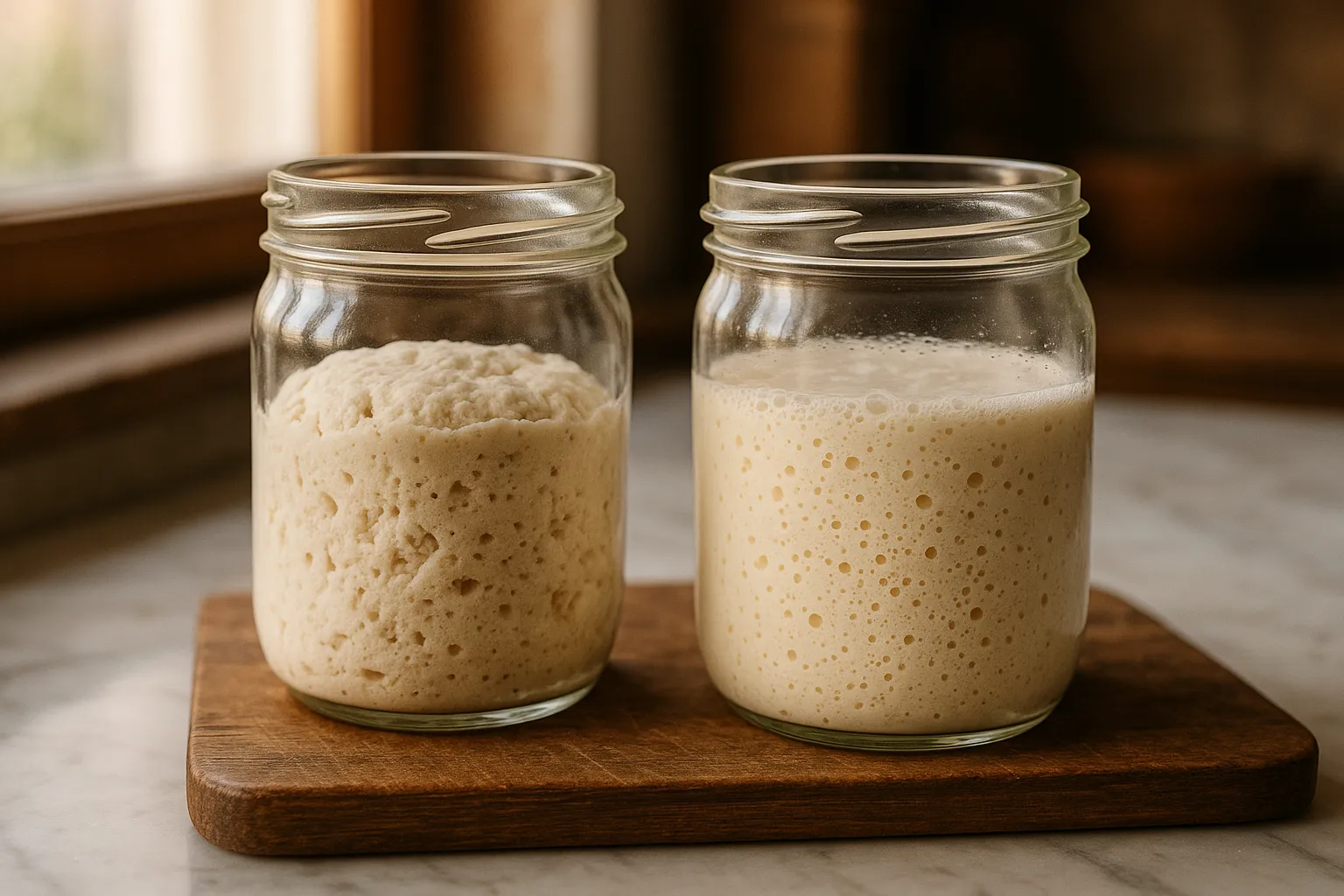
Starter Hydration Levels and Their Effects
Learn how sourdough starter hydration ratios affect fermentation speed and flavor. Bubba Goodcrumb explains the science behind water-to-flour balance for home.